About Liquid Helium Gas Cylinder
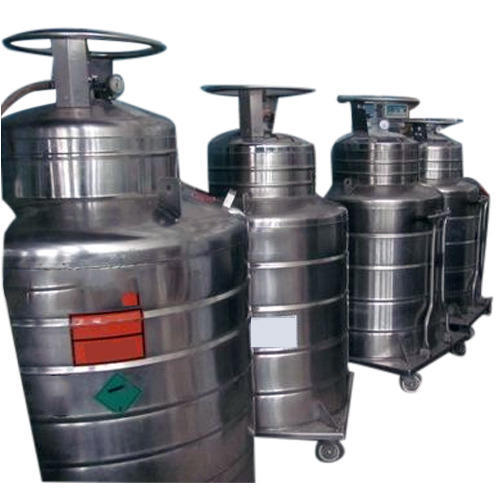
One of the important components in cryogenic applications is Liquid Helium Gas Cylinder which has ultracold Helium with a shape of gaseous form. It is carefully engineered to withstand such high temperatures and pressures, guaranteeing safe storage of this valuable element. Apart from its sleek silver appearance and sturdiness, the cylinder stands as a symbol of dependability in scientific laboratories hospitals, industrial sites among other places. Liquid Helium Gas Cylinder is in high demand in research fields including physics, medicine, as well as materials science.
| Capacity |
30 l |
| Material |
MS |
| Wall Thickness |
4 TO 8 MM |
| Usage/Application |
Industrial |
| Brand |
Panki |
Advanced Cryogenic Storage TechnologyThese cylinders are constructed from durable stainless steel or aluminum Dewar vessels, providing excellent insulation and structural integrity. Whether for laboratory or industrial purposes, this advanced design ensures efficient storage and handling of liquid helium, reducing boil-off and maintaining purity.
Optimal Safety and Handling MeasuresSafety is a priority when dealing with cryogenic liquids. Each helium dewar features pressure-relief, transfer/fill, and vent valves that maintain system integrity and user protection. Proper cryogenic safety gear is mandatory to prevent cold burns and other hazards during operation or transfer.
Tailored for Precision ApplicationsOur liquid helium gas cylinders are essential in fields such as magnetic resonance imaging, scientific instrumentation, and superconducting magnet cooling. Available in various capacities (30L250L), they cater to diverse requirements in research, healthcare, and high-tech manufacturing.
FAQs of Liquid Helium Gas Cylinder:
Q: How should a liquid helium gas cylinder be handled safely?
A: Always use proper cryogenic safety gear, including gloves and eye protection, when handling liquid helium cylinders, as it presents a risk of severe cold burns. Ensure the area is well-ventilated and avoid direct contact with skin or eyes during transfer or filling operations.
Q: What industries commonly use liquid helium gas cylinders?
A: Liquid helium gas cylinders are essential in research laboratories, cryogenics, magnetic resonance imaging (MRI), semiconductor manufacturing, aerospace, and scientific instrumentation due to their extreme cooling capabilities and high purity.
Q: When does liquid helium remain in its liquid state, and at what temperature does it boil?
A: Liquid helium remains in its liquid state between 273C and 269C, with a boiling point at 268.9C (4.2 K). At atmospheric pressure, helium does not solidify even at absolute zero, making it unique among cryogenic liquids.
Q: Where should liquid helium cylinders be stored for optimal performance?
A: Store liquid helium dewars in well-insulated, secure, and ventilated areas away from heat sources. Insulated dewars minimize helium boil-off and maintain stable low temperatures for extended use.
Q: What is the process of transferring liquid helium from the cylinder?
A: Liquid helium is transferred using dedicated transfer/fill valves and appropriate cryogenic transfer lines. The process is designed to minimize loss due to evaporation, and all procedures should be conducted by trained personnel following strict safety protocols.
Q: How long can a full dewar last during use?
A: The typical use duration of a full dewar depends on the transfer rate and insulation efficiency, ranging from a few hours to several days. Factors such as volume (30L to 250L) and application requirements influence the total duration.
Q: What are the benefits of using high-purity liquid helium gas cylinders?
A: High-purity liquid helium (99.999%) enables precise scientific measurements, efficient cryogenic cooling, and is crucial for applications where contamination can compromise performance, such as superconducting magnets and advanced imaging systems.









 Send Inquiry


 Send Inquiry